Spain is not one country photographically — it's five or six. The whitewashed villages of Andalucía and the Alhambra's geometrically perfect courtyards bear almost no visual relationship to the industrial modernity of Bilbao's Guggenheim, the volcanic lunar landscape of Lanzarote, the Gothic peaks of Montserrat, or the green Atlantic drama of the Picos de Europa. The Ruta del Cares gorge in Asturias — a 12km path cut into the limestone cliff face above a river gorge — is one of the most spectacular hiking trails I've walked in Europe and almost completely unknown outside Spain. Add the pintxos culture of San Sebastián, the architecture of Gaudí in Barcelona, and the light of Salamanca's sandstone Plaza Mayor at dusk, and Spain becomes a lifetime's photography destination.
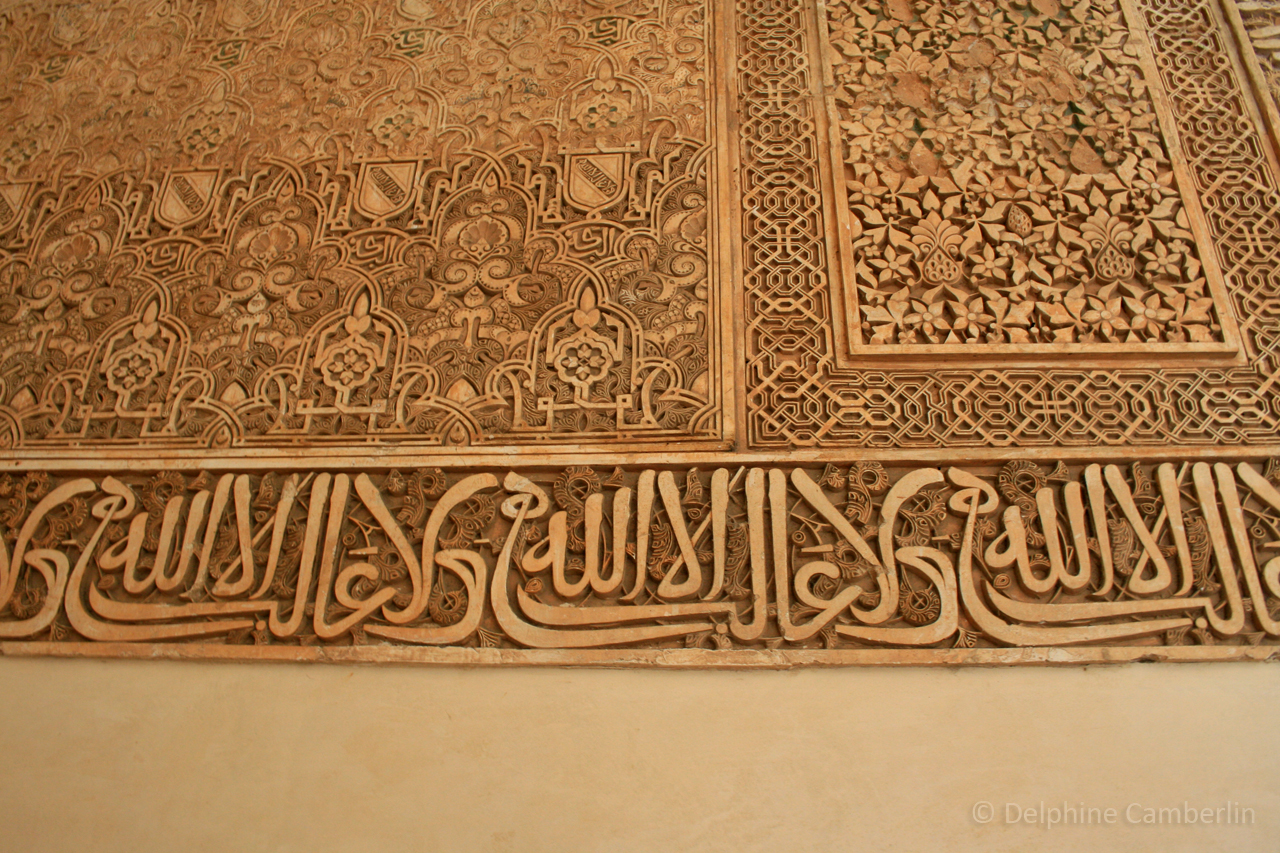
● The Alhambra, Granada — the Nasrid Palaces inside the Alhambra are among the finest examples of Islamic architecture in the world, and the combination of geometric tile work, carved stucco, and water features creates extraordinary detail photography opportunities. Book tickets weeks in advance — timed entry is strictly enforced and sells out constantly.
● Bilbao and the Guggenheim — Frank Gehry's titanium-clad building is a masterwork of architectural photography. The Puppy floral sculpture by Jeff Koons at the entrance and the Louise Bourgeois spider Maman are equally strong subjects. Bilbao's old quarter and the Mercado de la Ribera add urban texture.
● Lanzarote's volcanic landscape — the Timanfaya National Park is unlike anywhere else in Europe. Black lava fields stretching to the horizon, geysers powered by residual volcanic heat below the surface, and the craters of the Fire Mountains all look as if the eruption happened last week rather than in 1730. The light here in the late afternoon, with the low sun casting shadows across the lava field texture, is extraordinary.
● The Ruta del Cares, Picos de Europa — a path carved into the face of a limestone gorge, with the river 500m below and limestone peaks above. The scale is hard to capture in a single frame; wide angle is essential, and the best light is in the morning when the sun reaches the gorge floor.
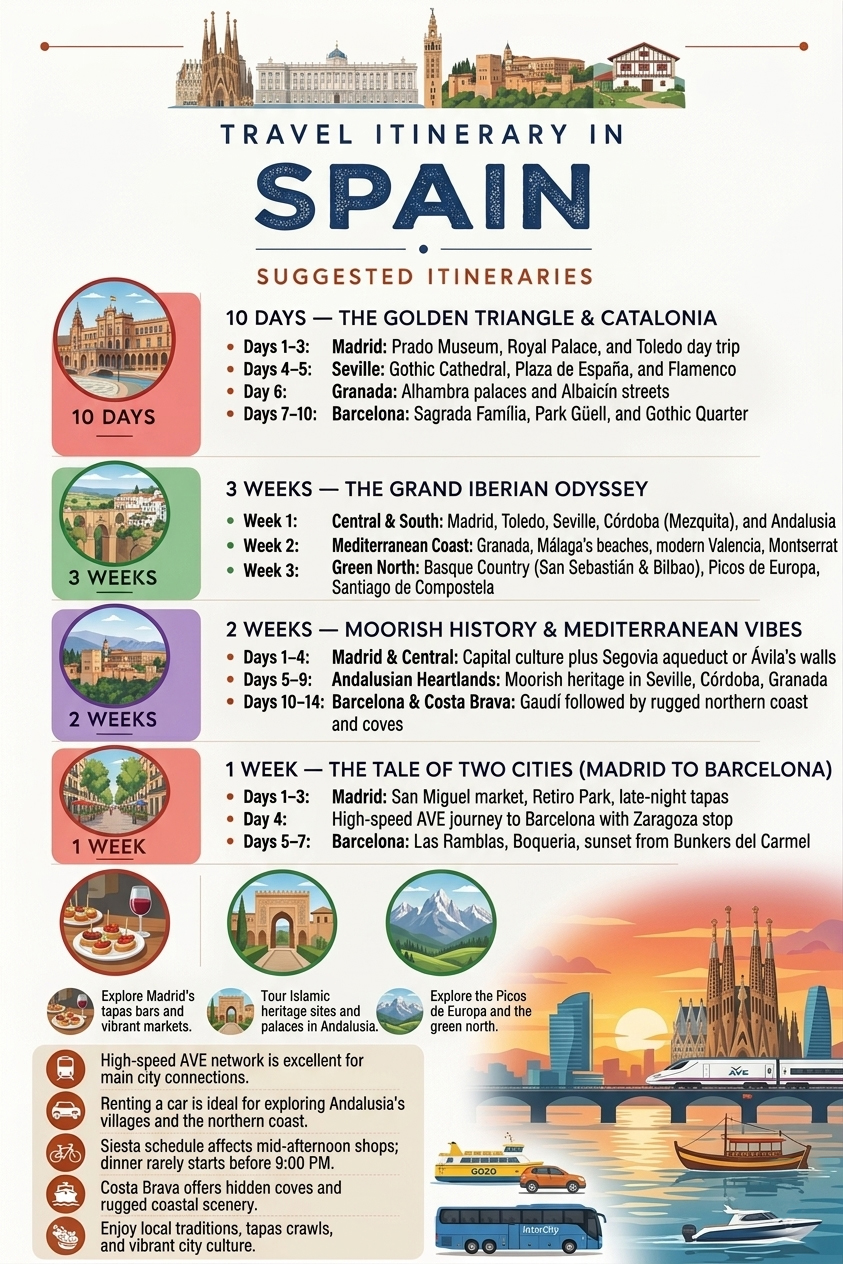
Spain offers exceptional value compared to France, Italy, or the UK — particularly for food, where the menú del día (a three-course lunch with wine for €10–14) remains a genuine institution. The AVE high-speed train network connects Madrid, Barcelona, Seville, Valencia, and Málaga efficiently, making a multi-region trip genuinely practical within a two-week window.
| 🗓️ | Recommended stay | 7 – 21 days |
| 🎒 | Budget / day | €50–80 / $55–88Hostel, menú del día (set lunch), AVE 2nd class |
| 🥂 | Luxury / day | €160–350 / $176–385Paradores (historic state hotels), Michelin dinners, private tours |
| 📅 | Best months | April – June · September – October |
| 🌡️ | Climate | 8–35°C · Huge variety: rainy Atlantic north, arid southCanary Islands warm year-round · August is very hot and crowded in cities |
| ✈️ | Visa | Schengen — EU / EEA free · US / UK visa-free 90 days |
| 💵 | Currency | EUR · Cards everywhere · Some small tapas bars & markets cash only |
| 🚂 | Getting around | AVE high-speed trains excellent between cities · Rental car for rural areas & national parks |
| 🛡️ | Safety | Low — safePickpockets active in Barcelona La Rambla & Madrid Puerta del Sol |
| 🍜 | Must-try food | Jamón ibérico, pintxos, paella valenciana, tortilla española, churros con chocolate |
| 💬 | Language | English in tourist areas · A few Spanish words go a long way · In Barcelona say "Català" not "Spanish" — regional pride matters |
Spain is a large and geographically diverse country. The AVE high-speed train network is one of the best in the world, making it incredibly easy to zip between Madrid, Seville, Valencia, and Barcelona in just a few hours. For the northern coast or the smaller villages of Andalusia, renting a car is a better option. Keep in mind the Spanish "siesta" schedule—many shops close in the mid-afternoon, and dinner rarely starts before 9:00 PM!
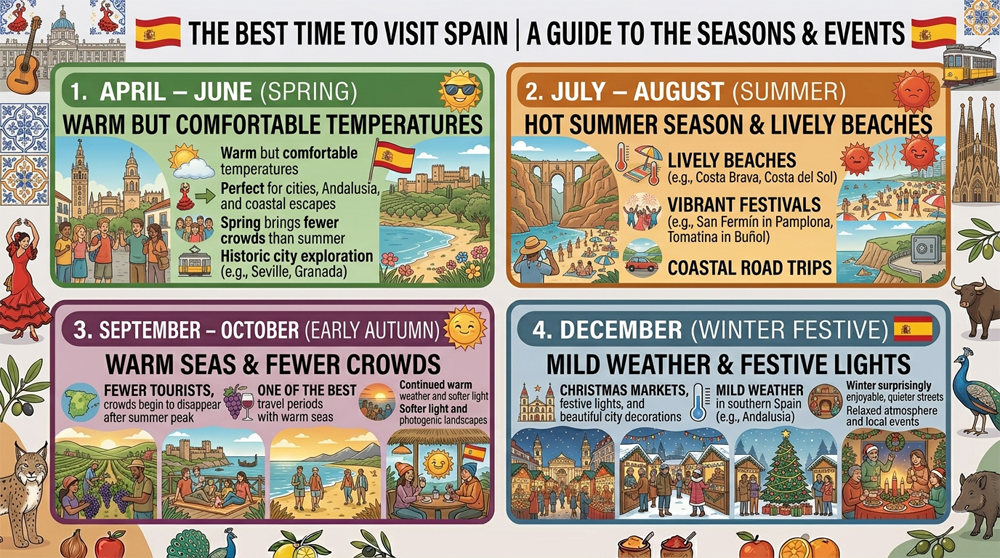
Warm but comfortable temperatures make spring perfect for cities, Andalusia, and coastal escapes.
Hot summer season with lively beaches, festivals, and nightlife across the country.
One of the best travel periods with warm seas and fewer crowds.
Christmas markets, festive lights, and mild weather in southern Spain make winter surprisingly enjoyable.
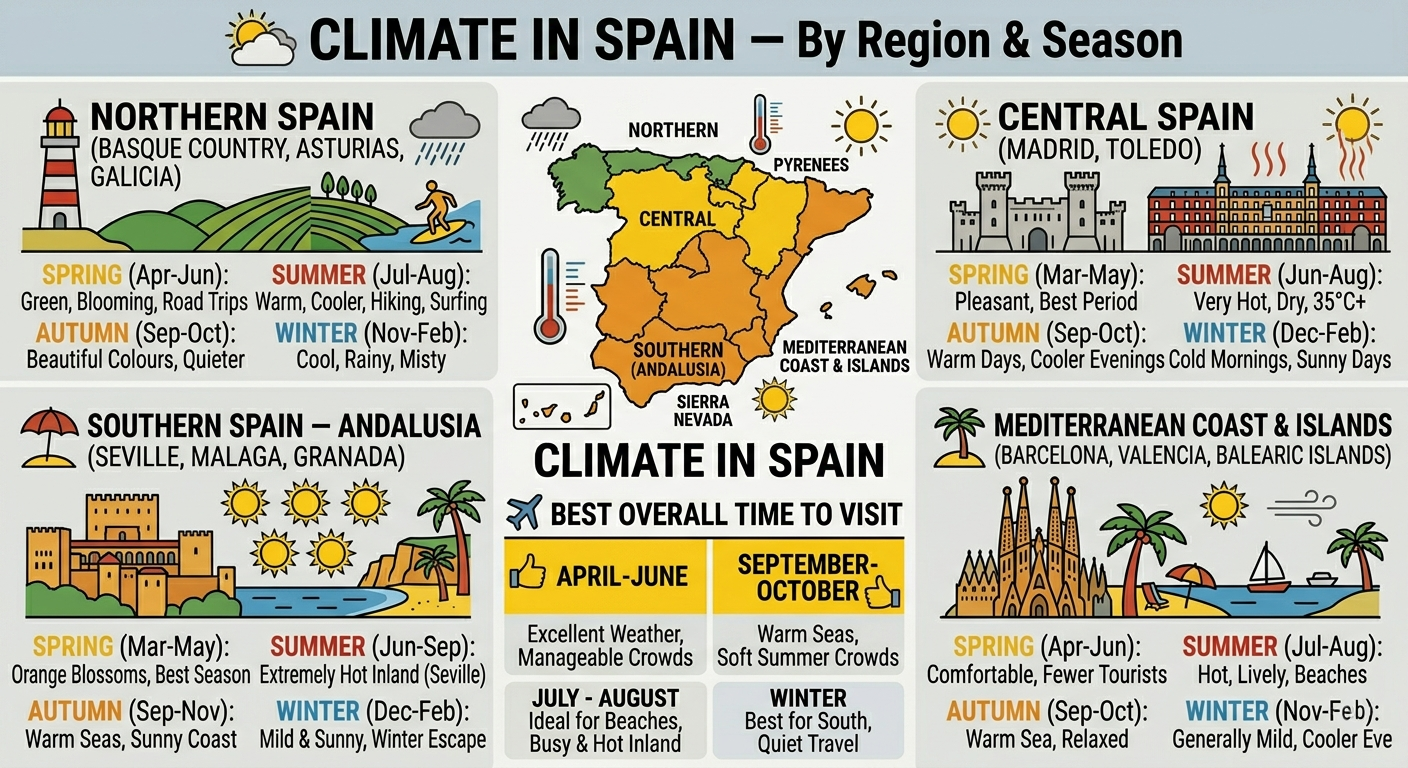
Spain has one of the most diverse climates in Europe, ranging from Mediterranean beaches and dry southern plains to green northern coastlines and snow-covered mountains. The country experiences hot summers, mild winters in the south, and more seasonal variation inland and in northern regions. Because of this diversity, the best time to visit Spain depends greatly on the region and type of travel experience you are looking for.
Spring — April to June Green landscapes, blooming countryside, and mild temperatures make spring an excellent time for road trips and coastal exploration.
Summer — July to August Warm but generally cooler than southern Spain, with comfortable temperatures ideal for hiking, surfing, and city breaks.
Autumn — September to October Beautiful colours, dramatic coastlines, and fewer tourists create a quieter atmosphere across the north.
Winter — November to February Cool, rainy, and often misty, especially along the Atlantic coast.
Spring — March to May One of the best periods to visit central Spain, with pleasant temperatures and lively city life.
Summer — June to August Very hot and dry, particularly in Madrid where temperatures can exceed 35°C.
Autumn — September to October Warm days and cooler evenings make autumn ideal for cultural travel and food experiences.
Winter — December to February Cold mornings and occasional frost inland, though sunny days remain common.
Spring — March to May Arguably the best season in Andalusia, with orange blossoms, festivals, and warm but manageable temperatures.
Summer — June to September Extremely hot inland, especially in Seville and Córdoba where temperatures can become intense.
Autumn — September to November Warm seas, sunny weather, and fewer crowds along the southern coast.
Winter — December to February Mild and sunny compared to much of Europe, making Andalusia a popular winter escape.
Spring — April to June Comfortable temperatures, blooming landscapes, and fewer tourists before peak season.
Summer — July to August Hot, lively, and ideal for beaches, nightlife, and island travel.
Autumn — September to October Sea temperatures remain warm while cities and beaches become more relaxed.
Winter — November to February Generally mild with cooler evenings, especially along the coast.
Winter — December to March Snow season brings skiing and winter sports opportunities in Spain’s mountain ranges.
Summer — June to September Cooler temperatures make the mountains perfect for hiking and outdoor activities.
Alhambra tickets with a guided Nasrid Palaces tour must be booked weeks ahead — they sell out constantly. GetYourGuide also has excellent food tours in San Sebastián, Flamenco shows in Seville, and Sagrada Família skip-the-line access in Barcelona.
Stock Photography
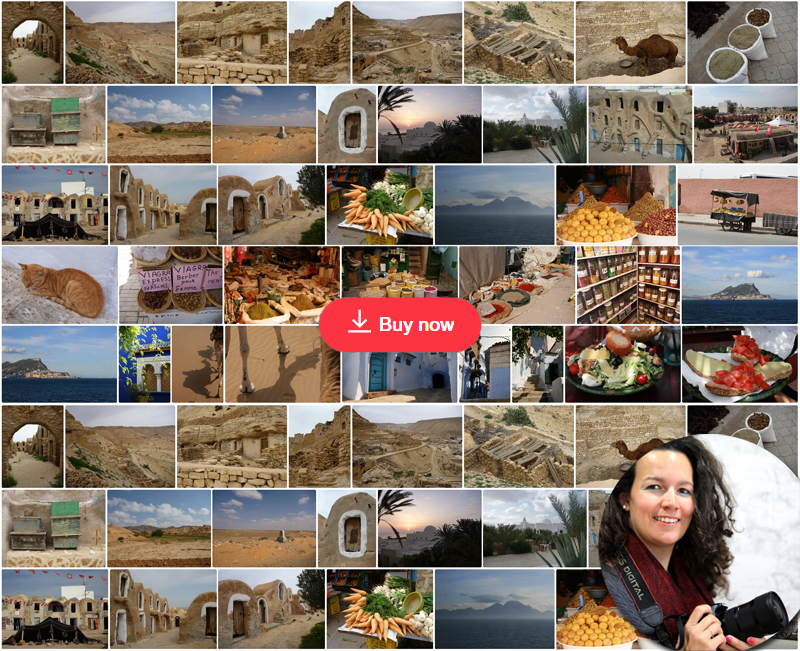
Browse and license the full Spain photography collection — available for commercial and editorial use on Shutterstock.
View on Shutterstock →
Stock Photography
Browse and license the full Arabic Style photography collection — available for commercial and editorial use on Shutterstock.
View on Shutterstock →