Norway is where nature operates at a scale that makes you feel appropriately small. The Sognefjord stretches 204km inland between walls of rock rising over a kilometre straight from the water. Trolltunga — the "troll's tongue" — is a horizontal rock shelf projecting 700m above a glacial lake. The northern lights over the Lofoten Islands reflect in the dark water below fishing villages that look unchanged since the Viking age. And in summer, the midnight sun means you can photograph landscapes at 2am in golden-hour light. Norway doesn't do subtle.
● The Lofoten Islands — the classic image of red wooden rorbuer (fishermen's cabins) reflected in still water, with dramatic snow-capped peaks rising behind, is one of the great travel photographs in the world. It's also genuinely what Lofoten looks like. The light here in winter, with low sun angles even at midday, is extraordinary for landscape work.
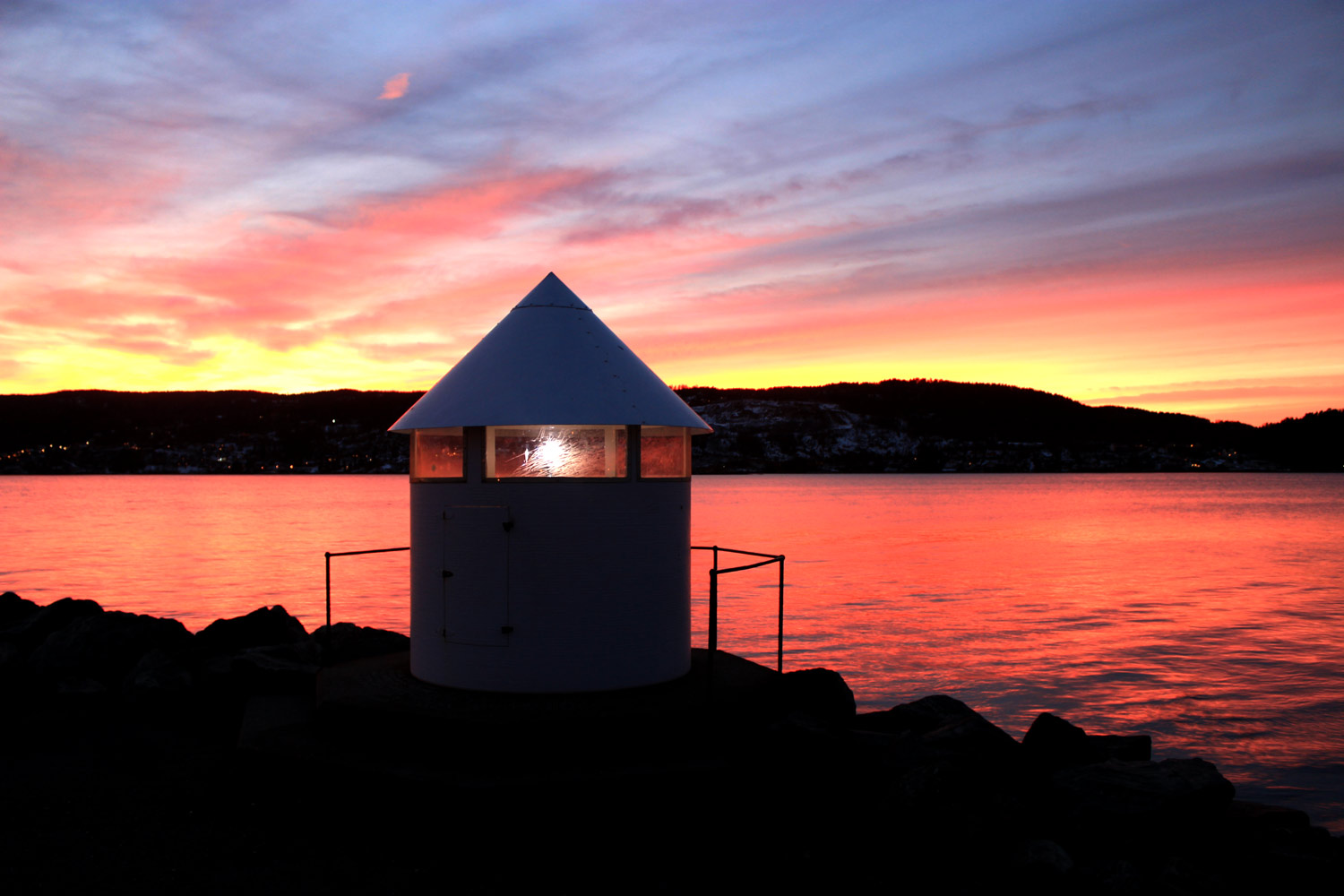
● Drøbak and the Oslo Fjord — a less obvious choice, but the small towns along the Oslo Fjord offer a quieter, more intimate version of Norwegian coastal life. I found some of my favourite Norway photographs in Drøbak — a summer evening walk along the fjord with the light going golden at 9pm.
● The Flåm Railway and Nærøyfjord — the train journey from Myrdal to Flåm descends 866m through some of Norway's most dramatic scenery, including the Kjosfossen waterfall. The Nærøyfjord below, one of the world's narrowest fjords, is best seen by kayak or small boat.
● Northern lights, September–March — Tromsø is the standard base for aurora hunting, but the Lofoten Islands and Svalbard offer better backdrops. The key is staying for at least five nights — aurora hunting requires patience and the willingness to be outside at 1am in -15°C.
Norway is one of the most expensive countries in the world for travel, but the infrastructure is excellent and self-catering from supermarkets significantly reduces daily costs. The country is set up for outdoor visitors — camping is legal almost everywhere under the allemannsretten (right to roam), and the national parks are free to enter. The cost of getting there and of activities is the real expense, not the landscape itself.
| 🗓️ | Recommended stay | 7 – 14 days |
| 🎒 | Budget / day | €100–140 / $110–155Hostel, supermarket self-catering, rail passes |
| 🥂 | Luxury / day | €280–550 / $308–605Design hotel, fjord cruise, fine dining |
| 📅 | Best months | Jun – Aug (fjords & midnight sun) · Sep – Mar (northern lights) |
| 🌡️ | Climate | −5 to 22°C · Cold winters · Pleasant summersExtreme north very cold — extreme midnight sun in summer |
| ✈️ | Visa | Schengen — EU / EEA free · US / UK visa-free 90 days |
| 💵 | Currency | NOK · Cards accepted almost universally — Norway is nearly cashless |
| 🚂 | Getting around | Flåm Railway, Hurtigruten coastal ferry, NSB trains · Rental car for fjords & remote areas |
| 🛡️ | Safety | Very low — extremely safe country |
| 🍜 | Must-try food | Brunost (sweet brown cheese), smoked salmon, lefse, fårikål (lamb & cabbage stew) |
| 💬 | Language | English spoken fluently by almost everyone · Norwegians are reserved but warm once you start a conversation |
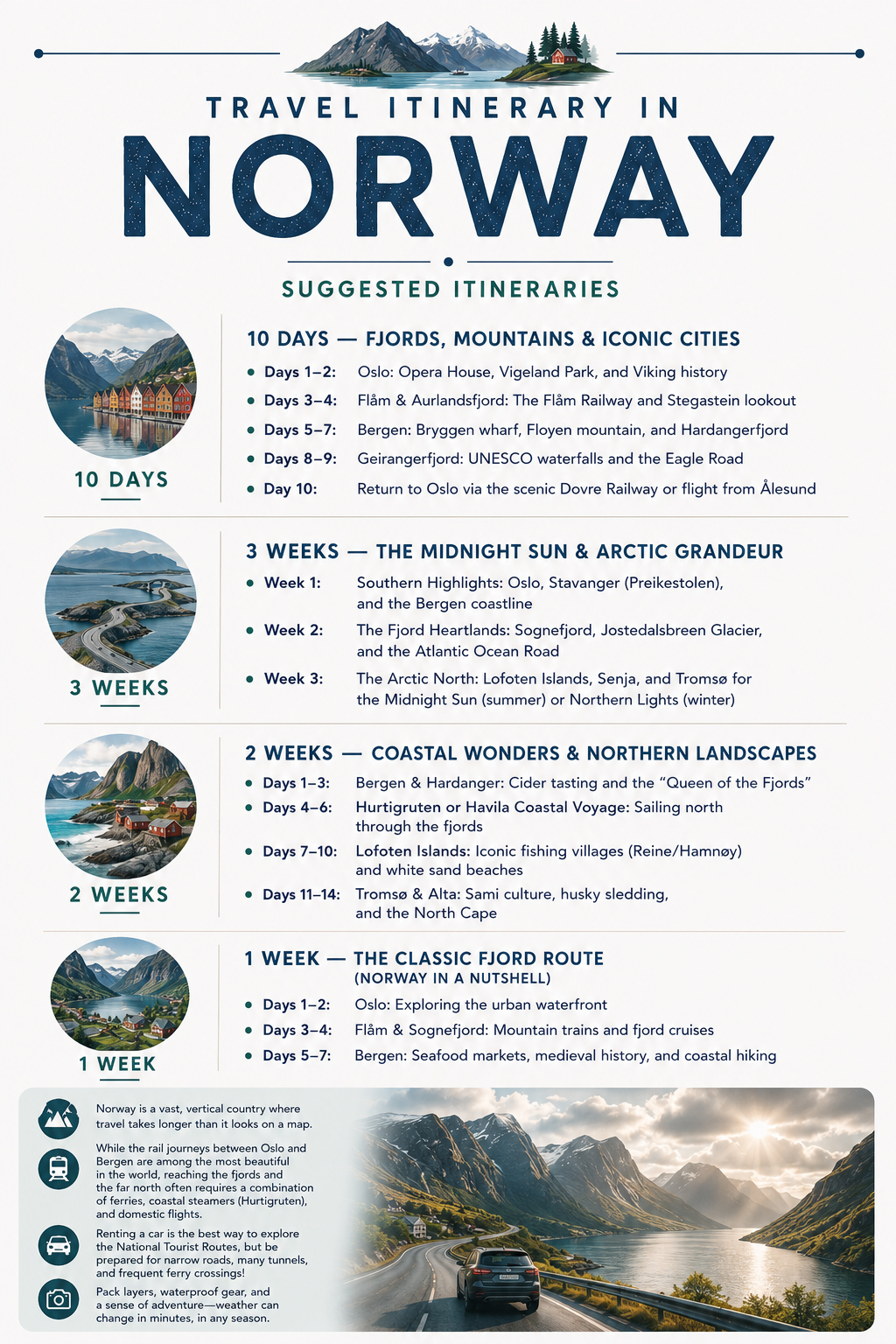
Norway is a vast, vertical country where travel takes longer than it looks on a map. While the rail journeys between Oslo and Bergen are among the most beautiful in the world, reaching the fjords and the far north often requires a combination of ferries, coastal steamers (Hurtigruten), and domestic flights. Renting a car is the best way to explore the National Tourist Routes, but be prepared for narrow roads, many tunnels, and frequent ferry crossings!
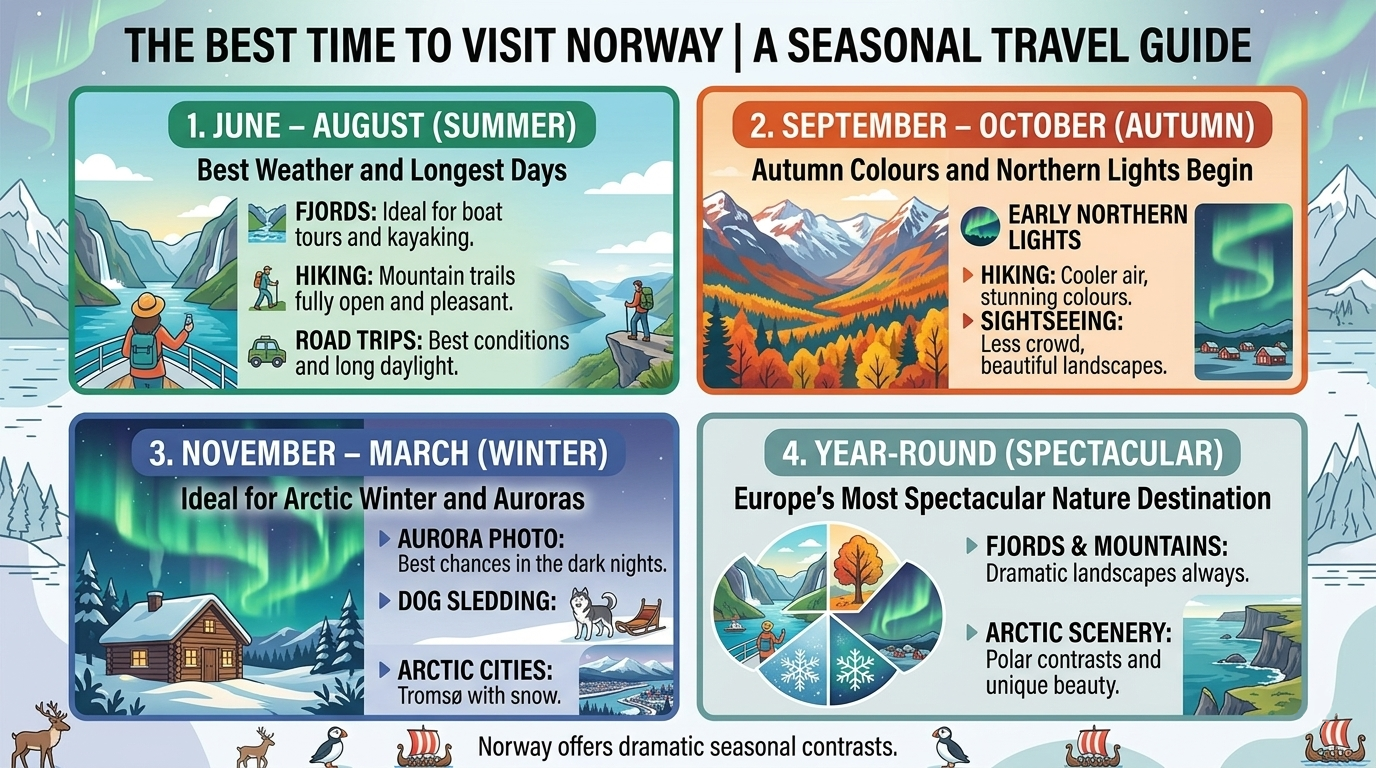
Best weather conditions for fjords, hiking, and road trips.
Excellent for autumn colours and early Northern Lights opportunities.
Ideal for Arctic winter landscapes and aurora photography.
Norway remains one of Europe’s most spectacular nature destinations thanks to its fjords, mountains, Arctic scenery, and dramatic seasonal contrasts.
Norway has a highly varied climate shaped by its long coastline, deep fjords, northern latitude, and mountainous interior. Conditions range from relatively mild Atlantic weather along the west coast to Arctic climates in the far north. Weather can change rapidly, particularly in fjord and mountain regions, creating some of Europe’s most dramatic natural scenery.
The country offers completely different experiences depending on the season — from Midnight Sun road trips and fjord hikes in summer to snow-covered landscapes and Northern Lights during winter.
May to September Best conditions for fjord cruises, hiking, and scenic road trips.
Year-Round Rainfall The west coast remains wetter than other parts of the country due to Atlantic weather systems.
Winter Dramatic snowy fjords and quieter travel conditions.
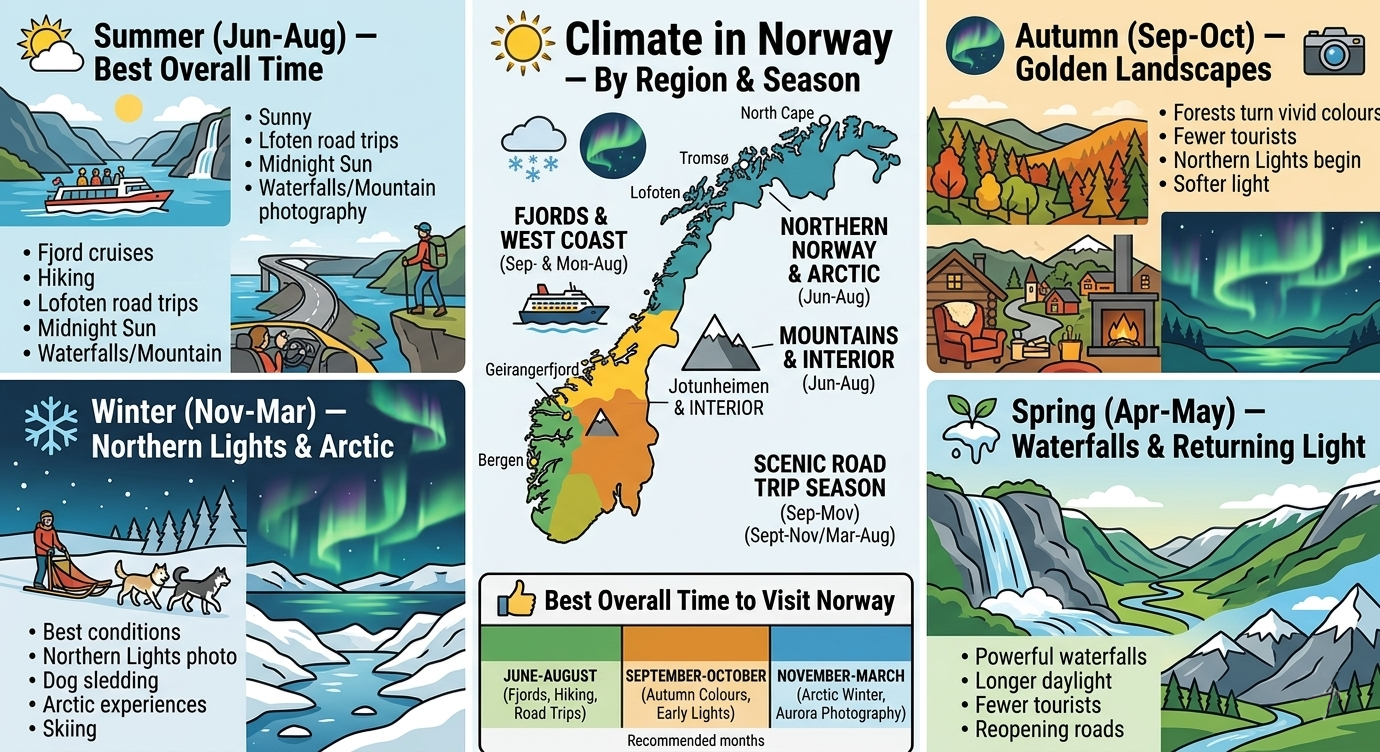
June to September Best season for hiking and mountain road access.
Winter Heavy snowfall transforms the interior into a major skiing and winter sports region.
Weather conditions change rapidly at altitude throughout the year..
June to July Midnight Sun season with nearly continuous daylight.
September to March Best period for Northern Lights viewing.
Winter Snow-covered Arctic scenery and dramatic coastal landscapes dominate the north.
June to September Most scenic roads, ferry routes, and mountain passes remain fully open during summer.
Winter Certain mountain roads may close temporarily due to snowstorms and extreme weather.
🎟️ GetYourGuide: "A guided northern lights photography tour from Tromsø and a fjord kayaking session in Nærøyfjord are experiences worth booking well ahead, especially in peak winter season."
Norway rewards an open-jaw itinerary — flying into Oslo and out of Bergen (or Tromsø) lets you travel the fjords and the north in one direction without backtracking. Alternatively, flying into Tromsø for the Northern Lights season and departing from Oslo gives you a natural south-to-north or north-to-south journey through the country. Kiwi.com handles these open-jaw combinations well and often finds better value than booking two separate one-way tickets.
Stock Photography
Browse and license the full Nature photography collection — available for commercial and editorial use on Shutterstock.
View on Shutterstock →
Stock Photography
Browse and license the full Permaculture photography collection — available for commercial and editorial use on Shutterstock.
View on Shutterstock →