Indonesia is 17,000 islands and a lifetime of photography. Bali alone — with its terraced rice fields at Tegallalang, the temple of Tanah Lot silhouetted against the sea at sunset, the Kecak fire dance at Uluwatu's clifftop amphitheatre, and the extraordinary spiritual density of Ubud — could occupy a dedicated photographer for weeks. Beyond Bali, the Buddhist monument of Borobudur at dawn is one of Asia's great travel experiences, the active volcano of Bromo rising from a sea of cloud is like nothing else I've seen, and the blue fire of Kawah Ijen, visible only at night, produces photographs that look supernatural.
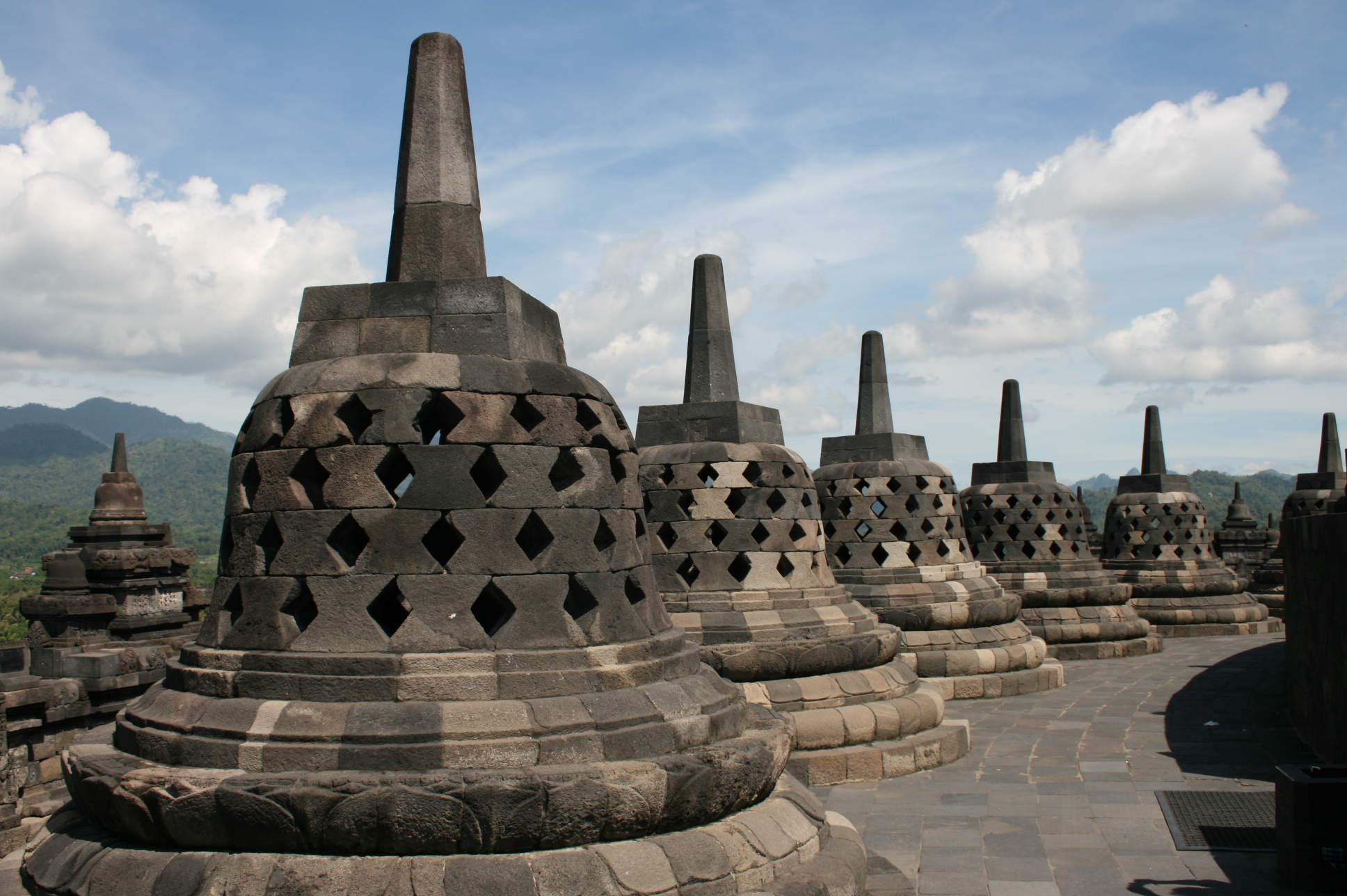
Borobudur at sunrise — arriving before dawn and climbing to the upper terraces as the mist burns off the surrounding jungle is one of the finest photographic experiences in Southeast Asia. The stupa-lined terraces with the Kedu Plain stretching out below glow in the early light in a way that afternoon visits completely miss.
Bali's rice terraces — Tegallalang near Ubud is the most-photographed, but Jatiluwih in the west is larger, less crowded, and has a UNESCO designation for good reason. The stepped geometry of the paddies, bright green in growing season, is endlessly compositional.
Mount Bromo — the volcanic complex of Bromo-Tengger-Semeru, with its smoking crater and surrounding sea of volcanic sand, is best photographed from Penanjakan viewpoint before sunrise. The drive up in a jeep in the dark, arriving at the viewpoint as the sky lightens, is one of the great adventure photography experiences in Indonesia.
Ubud's offerings and temple life — Bali's spiritual life is lived publicly. Women place daily offerings outside every home and business, temple festivals happen constantly, and the combination of incense, flowers, and prayer creates an atmosphere that's deeply photogenic without ever feeling staged.
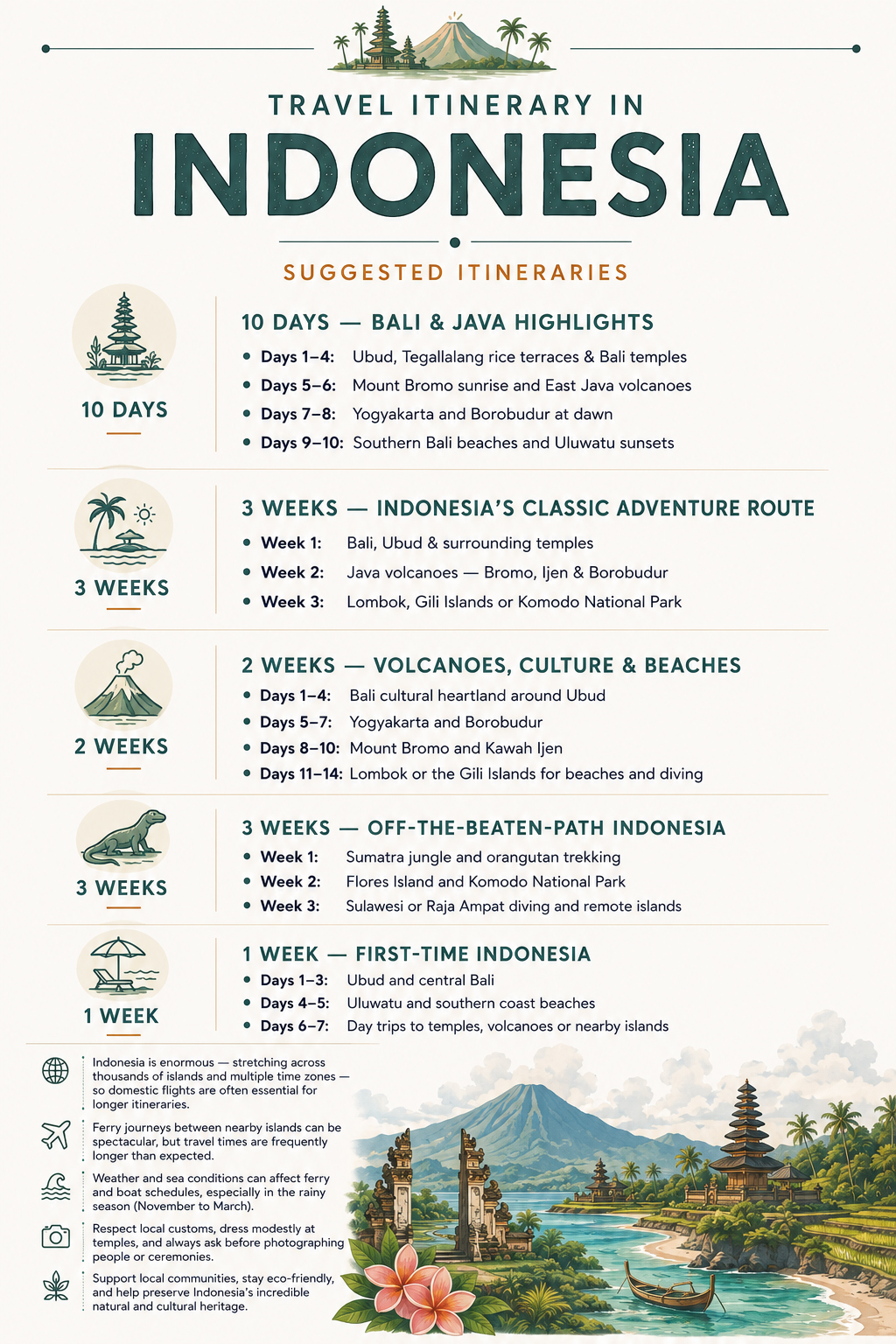
Indonesia offers extraordinary value — particularly outside Bali's tourist belt — and the diversity of landscapes and cultures across the archipelago means you can design very different trips even on return visits. The key logistical challenge is the distances between islands: domestic flights are essential for anything beyond Bali and Java, and they're inexpensive if booked in advance.
| 🗓️ | Recommended stay | 14 – 21 days |
| 🎒 | Budget / day | €25–45 / $28–50Guesthouse, warungs (local eateries), scooter rental |
| 🥂 | Luxury / day | €120–350 / $132–385Villa with pool, private guide, fine dining |
| 📅 | Best months | April – October |
| 🌡️ | Climate | 26–34°C · Tropical year-roundDry Apr–Oct · Wet & humid Nov–Mar |
| ✈️ | Visa | Visa on arrival or e-VOA ($35) for most nationalities · 30 days, extendable |
| 💵 | Currency | IDR (millions — takes getting used to!) · Cards in tourist areas · Cash for rural & outer islands |
| 🛵 | Getting around | Scooter rental in Bali · Domestic flights between islands · Ferries · Grab app in cities |
| 🛡️ | Safety | Medium — safe in tourist areasNatural disaster awareness needed (volcanoes, earthquakes) |
| 🍜 | Must-try food | Nasi goreng, satay, gado-gado, rendang, tempeh, fresh fruit juices |
| 💬 | Language | English in tourist areas · Bahasa Indonesia useful outside Bali · People very friendly and patient |
Indonesia is enormous — stretching across thousands of islands and multiple time zones — so domestic flights are often essential for longer itineraries. Ferry journeys between nearby islands can be spectacular, but travel times are frequently longer than expected. Building in slower days between major moves makes the experience far more enjoyable.
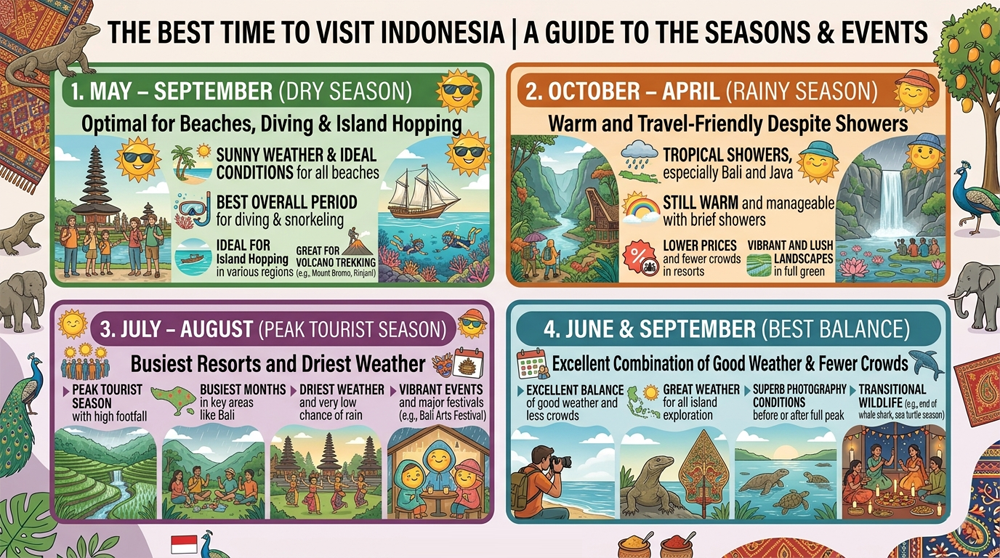
Dry season with sunny weather and ideal conditions for beaches, diving, and island hopping.
Rainy season with tropical showers, especially in Bali and Java. Still warm and travel-friendly.
Peak tourist season with the driest weather and busiest resorts.
Excellent balance of good weather and fewer crowds.
Indonesia has a tropical climate with warm temperatures and high humidity throughout the year. Spread across more than 17,000 islands and several time zones, the country experiences significant regional differences between the dry season and the monsoon season.
While weather patterns vary from island to island, Indonesia is generally divided into two main seasons: the dry season and the wet season. Thanks to its size and diversity, there is almost always a part of Indonesia with favourable travel conditions somewhere in the archipelago.
April to October
Dry, sunny weather with warm temperatures and ideal beach conditions.
November to March
Higher humidity and regular tropical showers, though long sunny periods still occur.
Bali remains a year-round destination despite the wetter months.
May to September
Best visibility for volcano landscapes, sunrise photography, and trekking conditions.
Wet Season
Volcanic landscapes become greener and more atmospheric, though clouds and rain are more frequent.
Temperatures are cooler at higher elevations, especially before sunrise.
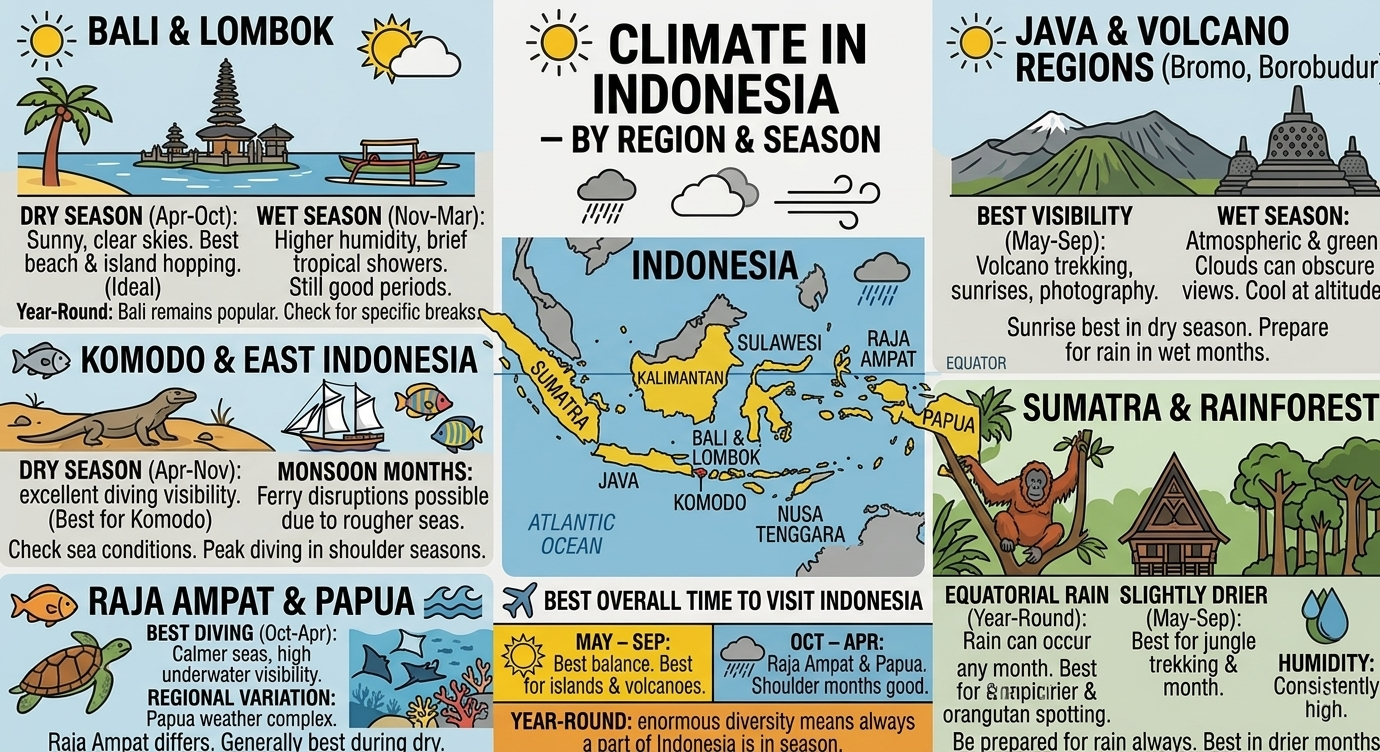
April to November
Excellent diving visibility, dry conditions, and calmer seas.
December to March
Some islands experience rougher seas and reduced ferry services during heavy monsoon periods.
Year-Round
Tropical rain can occur in any month due to the equatorial climate.
May to September
Generally slightly drier and better for jungle trekking and orangutan expeditions.
Humidity remains consistently high throughout the year.
October to April
Generally considered the best season for diving with calmer seas and excellent underwater visibility.
May to September
Conditions remain good, though regional weather patterns vary significantly across Papua.
🎟️ GetYourGuide: "Borobudur sunrise with a local guide, a Mount Bromo jeep tour, and a Kecak fire dance at Uluwatu are three bookings I'd make before leaving home."
Stock Photography
Browse and license the full Permaculture photography collection — available for commercial and editorial use on Shutterstock.
View on Shutterstock →
Stock Photography
Browse and license the full Asia photography collection — available for commercial and editorial use on Shutterstock.
View on Shutterstock →